
Taylor Clamshell Grill:
The Complete Buyer's Guide
Everything operators need to know about double-sided commercial grilling — how it works, which model fits your kitchen, and why so many operators never go back to a flat top.
In This Guide
If you're comparing a clamshell grill to your current setup — or evaluating one for the first time — you've landed in the right place. This guide was built for operators, kitchen managers, and foodservice decision-makers who want a clear, honest breakdown before making a major equipment investment. We cover what clamshell grills are, why they outperform flat tops in high-volume environments, and which Taylor model makes sense for your specific operation. No fluff. Just the information you need to buy with confidence.
What Is a Clamshell Grill?
A clamshell grill — also called a two-sided grill, double-sided grill, or contact grill — is a commercial cooking appliance that applies heat simultaneously from both a heated lower surface and a hinged upper platen. The upper platen lowers onto the food, cooking it from the top and bottom at the same time without any flipping required.
The name "clamshell" comes from the way the upper platen opens and closes like a clamshell. When the cook cycle finishes, the platen lifts automatically and the product is done — consistent internal temperature, consistent sear, every single time.
Taylor's L-Series clamshell grills take this concept further with programmable cooking controls, independent cooking zones, automatic platen gapping, and rapid heat recovery systems that make them the preferred choice for high-volume foodservice operations around the world. Brands like McDonald's and Dairy Queen have built their kitchen workflows around Taylor clamshell grills — not because they're a novelty, but because they solve real operational problems at scale.
Clamshell Grill vs. Flat Top Grill: What's the Difference?
If you currently run a flat top and are evaluating whether a clamshell grill makes sense for your operation, this is the comparison that matters most. Both are legitimate commercial cooking tools — but they serve different operational needs.
| Feature | Taylor Clamshell Grill | Traditional Flat Top |
|---|---|---|
| Cooking method | Top and bottom simultaneously | Bottom only — requires flipping |
| Cook speed | Up to 66% faster | Standard cook times |
| Consistency | Programmed, repeatable every time | Dependent on operator skill |
| Labor required | Minimal — one touch to start a cycle | Constant attention and flipping |
| Training time | Short — preset programs do the work | Longer — technique-dependent |
| Heat distribution | Even — both sides controlled independently | Can create hot and cold spots |
| Menu flexibility | Up to 75 pre-programmed items | High flexibility, low consistency |
| Grease management | Watershed design, easy Teflon® cleanup | Manual scraping required |
| Best for | High-volume, standardized menus | Artisan cooking, breakfast menus |
The flat top isn't going away — it's excellent for cooking pancakes, eggs, and certain breakfast items where technique and texture variation are part of the experience. But for operations where speed, consistency, and throughput are the priority, the flat top simply cannot keep up with what a modern two-sided clamshell grill delivers.
Key Benefits of Double-Sided Cooking
Here's what actually changes in your kitchen when you move from a flat top to a clamshell grill.
1. Dramatically Faster Cook Times
Cooking from two sides at once means proteins hit safe internal temperatures in a fraction of the time compared to single-surface cooking. Taylor's L-Series grills reduce cook times by up to 66% compared to traditional flat top grills. During a lunch rush or drive-thru push, that speed difference is the margin between a satisfied customer and a lost one.
2. Consistent Results Across Every Shift
One of the most costly problems in any foodservice operation is inconsistency. A burger cooked by a 10-year veteran should look and taste the same as one cooked by a new hire on their first week. With programmable cook profiles — controlling time, temperature, and platen pressure for up to 75 different menu items — every product that comes off a Taylor clamshell grill is produced the same way, regardless of who pressed the button.
3. Reduced Labor and Training Time
Because the grill manages the cook cycle automatically, operators don't need to hover over the cooking surface, flip products, or monitor doneness by eye. One staff member can manage the grill while attending to other tasks. That labor reduction adds up — and for multi-location operators rolling out new menu items across dozens of units, the ability to upload new cook programs digitally means consistent retraining at scale.
4. Multiple Independent Cooking Zones
Taylor's larger L-Series models feature independently controlled cooking zones across the grill surface. That means you can cook chicken at one temperature in zone one while searing a different protein at a different temperature in zone two — simultaneously, without flavor transfer or temperature compromise. During off-peak hours, unused zones can be powered down to conserve energy.
5. Easy Cleaning and Maintenance
Taylor clamshell grills use Teflon® release sheets on both the upper and lower cooking surfaces, which means food releases cleanly and cleanup is fast. The watershed design channels grease away from the cooking surface efficiently, reducing mess and downtime between cook cycles. Less cleaning time means more time producing food.
See It in Action: Clamshell vs. Flat Top Side by Side
Words and specs only go so far. Watch TFG's own side-by-side time lapse of a Taylor clamshell grill running against a flat top — the throughput difference is significant.
TFG's 10-minute time lapse showing Taylor clamshell output vs. flat top side by side.
Taylor Clamshell Grill Model Breakdown
Taylor's L-Series lineup spans ten models across three broad use-case categories — from compact single-zone units to large-format flagship grills with active compression cooking and IoT connectivity. Here is how they break down, grouped by footprint and operational fit.
High-Volume Series — L810, L811, L812, L813
36" Cooking Surface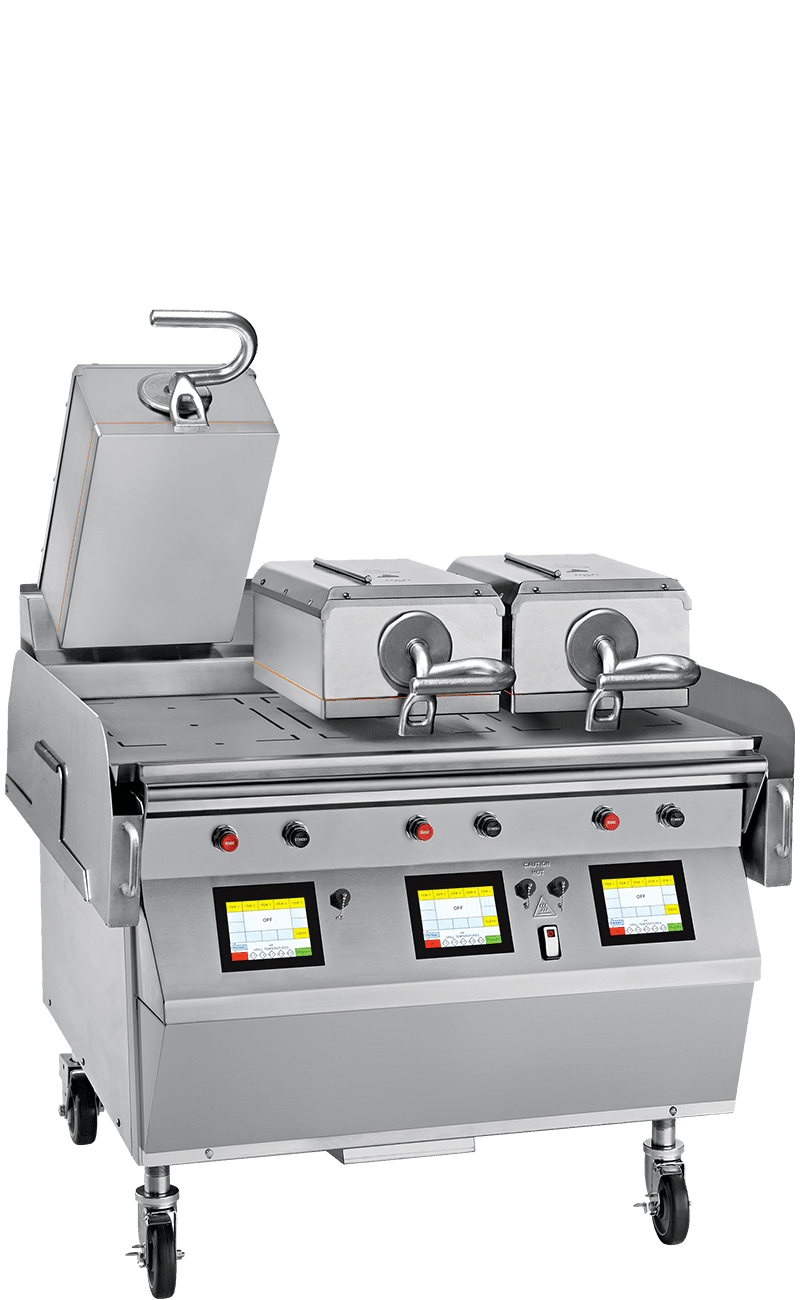

The L810, L811, L812, and L813 are Taylor's largest-footprint clamshell grills, all sharing a 36-inch cooking surface and built for the highest-volume production environments. The primary differences within this group come down to platen count and heat source.
- Three independent cooking zones for maximum multi-product flexibility
- Rapid heat recovery maintains output during continuous peak-hour service
- Programmable SmartTechnology controls — up to 75 menu items stored
- Intuitive touchscreen interface reduces training time significantly
- Teflon® release sheets on upper and lower surfaces for fast cleanup
- Electric or gas lower platen — match your existing utility setup
Mid-Size Series — L819, L820, L828
12" – 24" Cooking Surface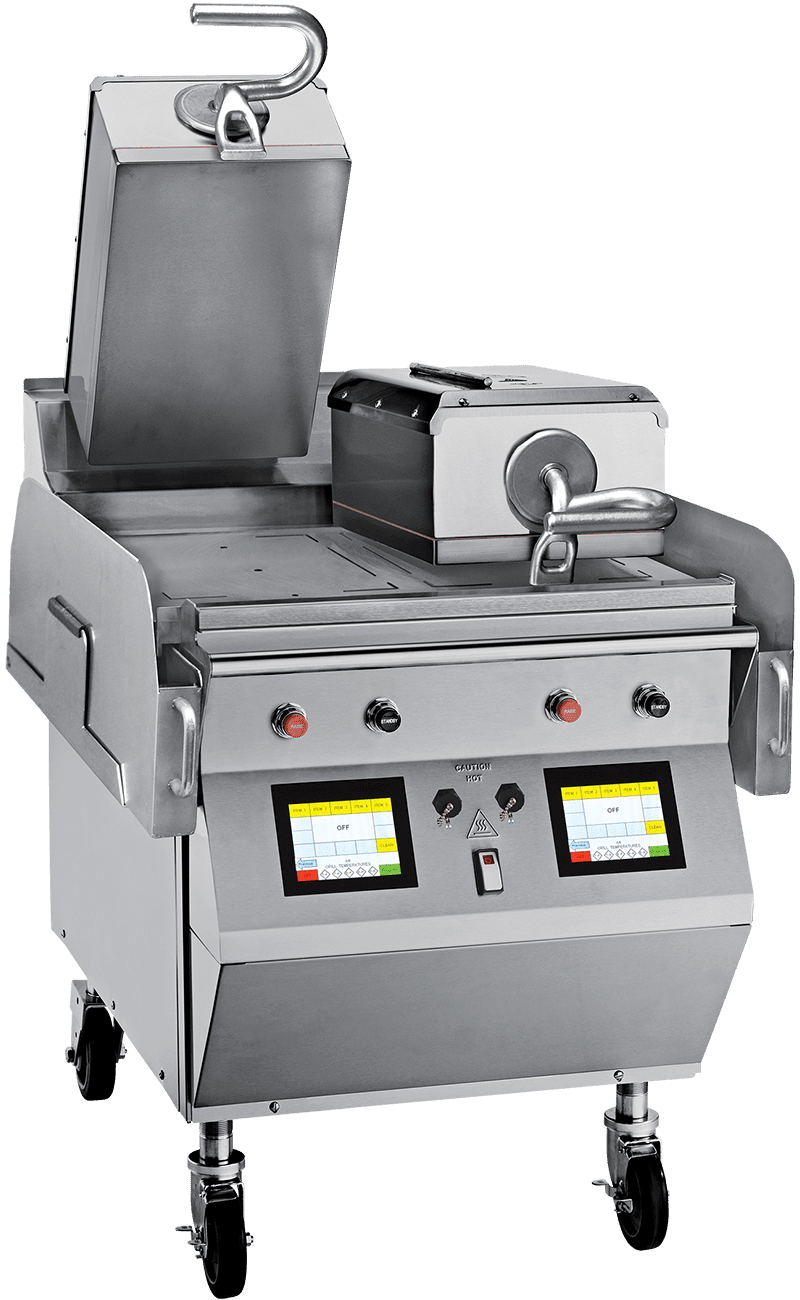

The L819 and L820 share a 24-inch cooking surface with two independent cooking zones — a practical middle ground that handles meaningful volume without the footprint of a full 36-inch unit. The L828 steps down further to a 12-inch, single-zone format — the most compact grill in the standard L-Series and a strong option for tighter kitchen layouts or lower-volume applications.
- L819/L820: two independent cooking zones handle different proteins simultaneously
- L828: compact 12" footprint fits where full-size grills cannot
- Same programmable SmartTechnology controls as the full-size units
- Gas or electric lower platen — flexible installation across different setups
- Rapid recovery maintains consistent temperatures during service rushes
Crown Series — L850, L852, L858
Flagship / IoT-Capable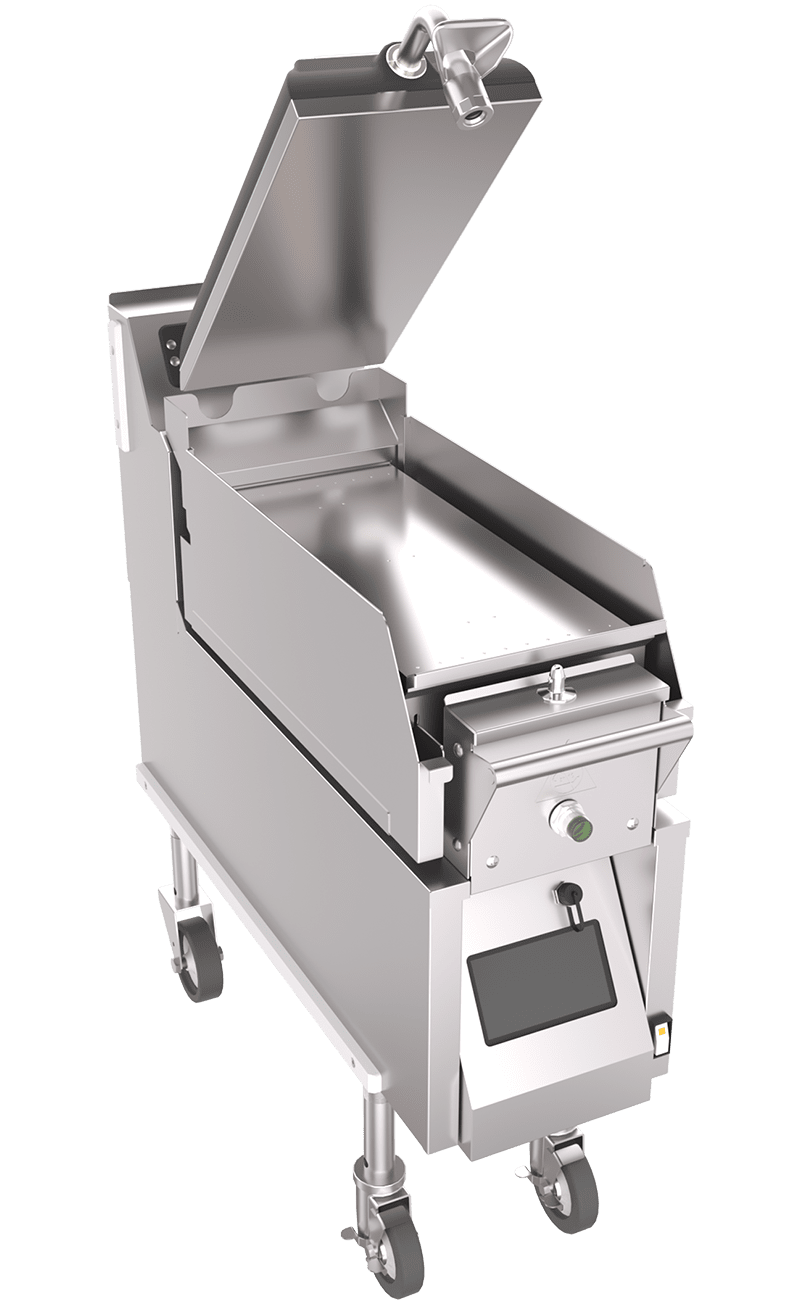
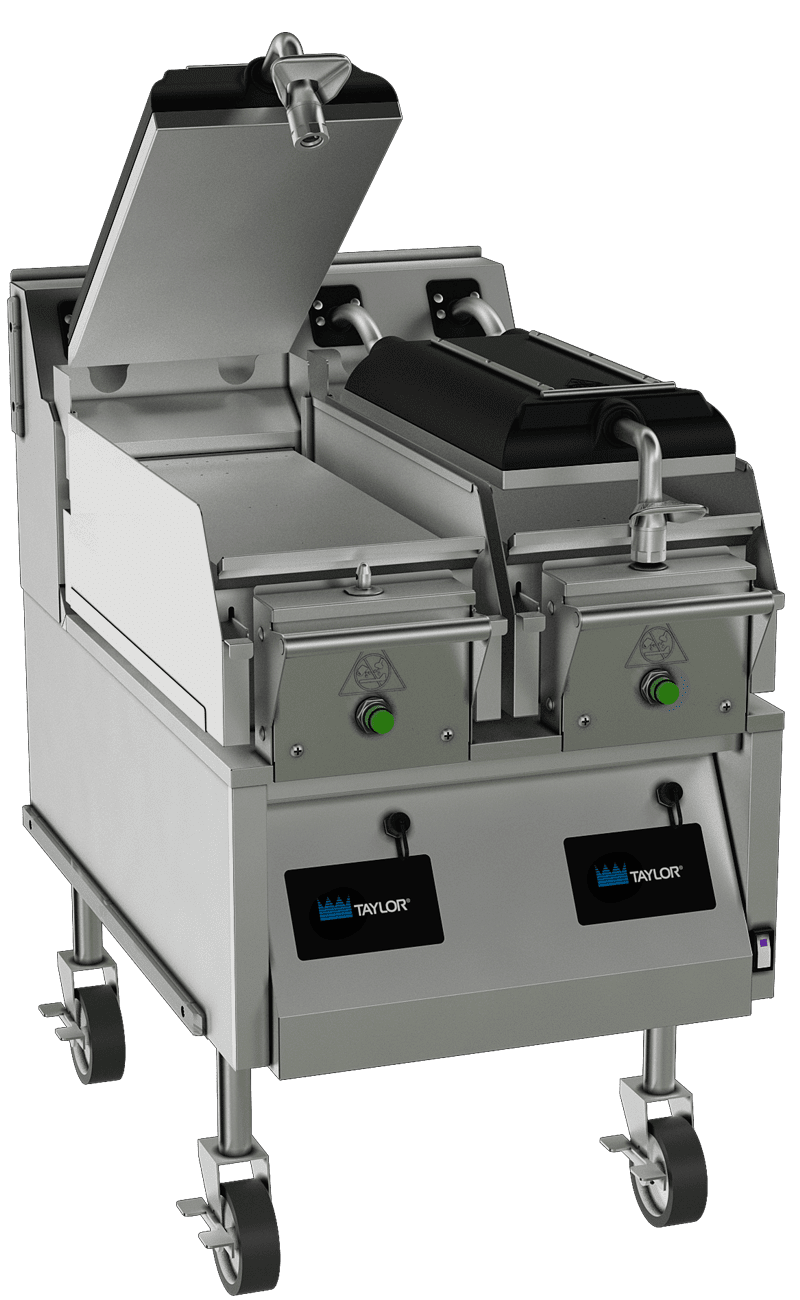

The Crown Series is Taylor's most advanced lineup of clamshell grills. The L850, L852, and L858 share the same core platform — differing in cooking surface width and zone count — and all three offer two capabilities not found elsewhere in the L-Series: Active Compression Cooking and IoT connectivity.
Active Compression Cooking means the upper platen actively applies controlled, consistent pressure to the product throughout the cook cycle — not just resting by gravity. This allows operators to precisely manage thickness and sear across a wider variety of proteins and menu items. IoT capability means the grill can be monitored and updated remotely, making Crown Series an excellent fit for multi-location operators who need centralized menu management and performance visibility across their fleet.
- Active Compression Cooking — controlled platen pressure for precise, consistent results
- IoT capable — remote monitoring, menu updates, and performance data across locations
- Wider cook gap range (2") handles thicker proteins and specialty menu items
- Scales from compact (L850 at 10.5") to full-size production (L858 at 31.5")
- All-electric upper and lower platens for precise, consistent heat control
- Full programmable SmartTechnology controls with touchscreen interface
At a Glance: All 10 Models
| Model | Surface | Zones | Platens | Lower Heat | Active Compression | IoT |
|---|---|---|---|---|---|---|
| L810 | 36" | 3 | 3 | Electric | No | No |
| L811 | 36" | 3 | 3 | Gas | No | No |
| L812 | 36" | 3 | 2 | Electric | No | No |
| L813 | 36" | 3 | 2 | Gas | No | No |
| L819 | 24" | 2 | 2 | Gas | No | No |
| L820 | 24" | 2 | 2 | Electric | No | No |
| L828 | 12" | 1 | 1 | Electric | No | No |
| L850 Crown | 10.5" | 1 | 1 | Electric | Yes | Yes |
| L852 Crown | 21" | 2 | 2 | Electric | Yes | Yes |
| L858 Crown | 31.5" | 3 | 3 | Electric | Yes | Yes |
Who Is a Clamshell Grill Right For?
One of the biggest strengths of Taylor's clamshell grill lineup is how broadly it applies across the foodservice industry. This isn't equipment built exclusively for national burger chains — it fits almost any operation that cooks proteins at volume and values consistency over character variation.
QSR and Fast Casual
The original home of the clamshell grill. Burger concepts, chicken programs, and drive-thru operations benefit most from the speed, programmability, and consistency these grills provide. McDonald's and Dairy Queen are two well-known examples that have built their kitchen workflows around Taylor clamshell grills.
Bars and Bar and Grill Concepts
Burgers are often a bar's highest-margin item. A clamshell grill lets your bar kitchen produce consistent, high-quality proteins during peak weekend service without requiring your most experienced cook to be on the grill all night.
Convenience Stores and Gas Stations
C-stores with foodservice programs need speed and simplicity above everything else. The compact L828 or Crown Series L850 fits the narrow footprints common to c-store kitchens while still delivering the throughput and programmability that keeps hot food programs running smoothly.
Concessions and Stadium Venues
High burst volume in short windows is the defining challenge of concession cooking. A Taylor clamshell grill's rapid heat recovery and programmable cook cycles mean your team can move hundreds of burgers or sandwiches during a single intermission or halftime without inconsistency or slowdowns.
Cafeterias and Institutional Dining
Schools, hospitals, corporate campuses, and other institutional operations run tight lunch windows with rotating staff. The minimal training requirements and one-touch operation of Taylor clamshell grills are a significant advantage in environments where staff consistency is a constant challenge.
Ghost Kitchens and Food Halls
When your entire operation runs out of a small shared kitchen, equipment that maximizes output per square foot is critical. Compact Crown Series grills with IoT connectivity are a natural fit for ghost kitchen operators running multiple virtual brands who need centralized performance visibility.
What to Consider Before Buying a Commercial Clamshell Grill
Before choosing a specific model, here are the questions that will help you narrow the field quickly.
How Much Volume Are You Producing?
This is the most important factor. If you're producing fewer than 50 proteins per service, a 12-to-24-inch model like the L828 or L819/L820 is a practical fit. If you're running hundreds per shift — drive-thru operations, stadium kitchens, institutional dining — you want the full 36-inch surface of the L810/L811/L812/L813 series or the Crown Series L858.
Electric or Gas?
Taylor offers both electric and gas lower platen options across the standard L-Series lineup. If your kitchen already has strong gas infrastructure and your utility costs favor gas, the L811, L813, or L819 are the natural choices. If you're in a space with limited gas access or you prefer all-electric for simplicity, the electric models cover every size category. The Crown Series is all-electric across the board.
How Many Products Are You Cooking Simultaneously?
If your menu involves cooking multiple different proteins or items at different temperatures at the same time, you want a multi-zone model. The L810 through L813 all offer three independent zones. The L819 and L820 offer two. The L828 and L850 are single-zone — best suited to operations running one product type at a time.
Do You Need IoT and Remote Management?
For single-location operators, IoT connectivity is a nice-to-have. For multi-location operators — especially those managing menu updates and performance consistency across dozens or hundreds of units — the Crown Series IoT capability is a meaningful operational tool. It allows centralized monitoring and remote cook program updates without sending a technician to each location.
What's Your Kitchen Footprint?
Be realistic about available counter or line space. Taylor's lineup covers every size from the 10.5-inch L850 to the 36-inch L810, so there's a model for virtually any kitchen layout. Measure before you spec.
Ready to Upgrade Your Grill?
Talk to our team about which Taylor clamshell grill fits your operation — volume, footprint, menu, and budget. We serve operators across TX, TN, LA, MS, and AR.